NEWMAN. A mining contractor built to the register the majors use.
- A fictional iron ore country contractor across ten pages, art directed to the register the Pilbara majors actually publish in: dust, ochre, plain numbers and no gloss.
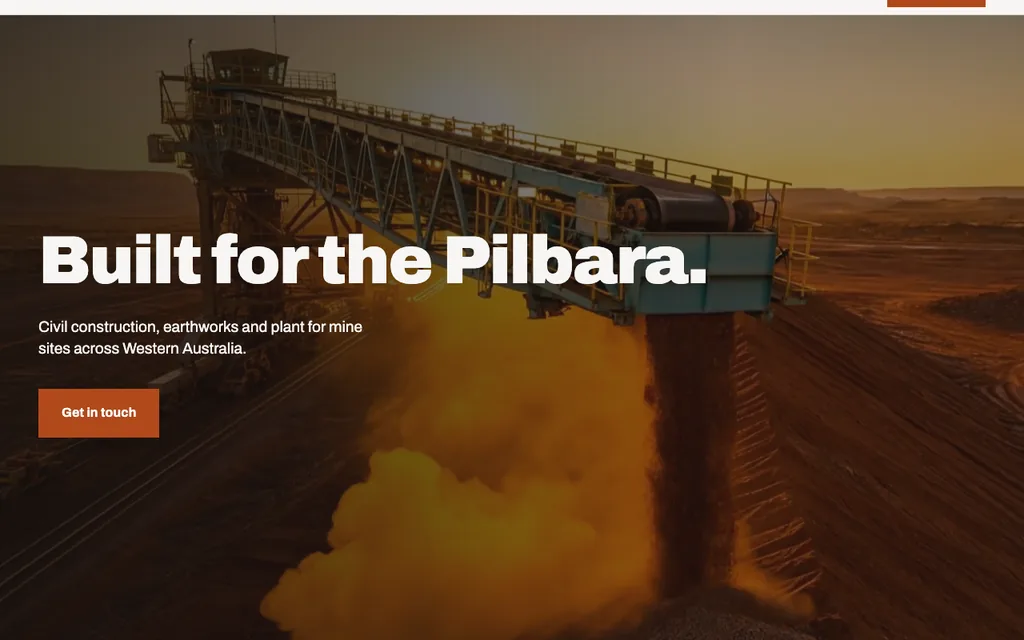
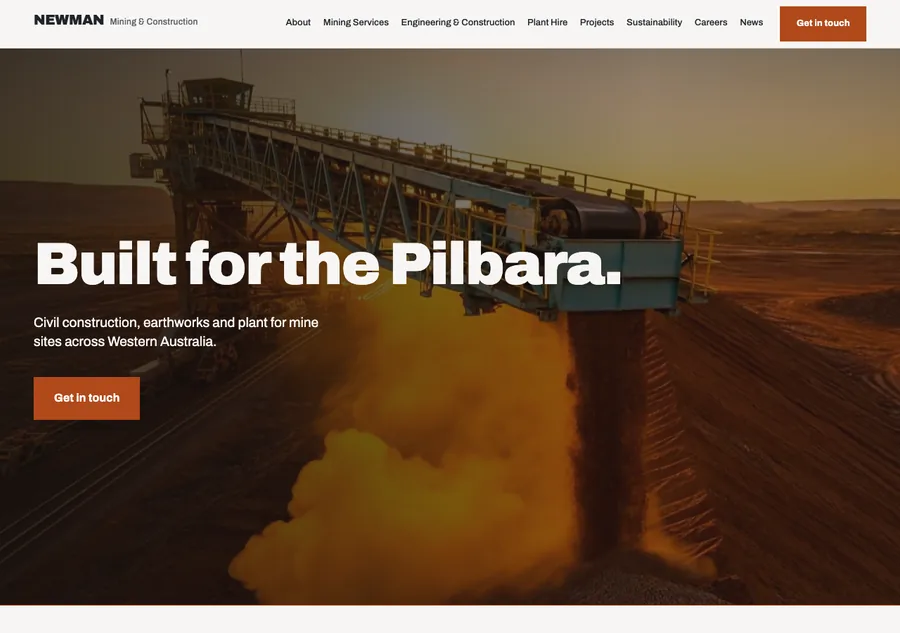
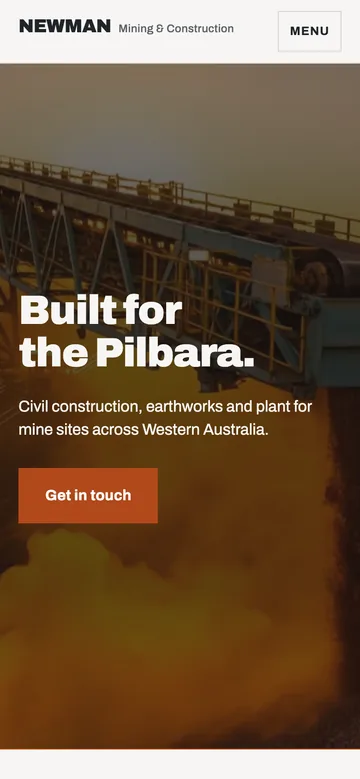
- The hero is a ten second film of a stacker discharging ore at last light, looping with no visible join, 1.9MB all in with a poster fallback.
- Contrast is measured against the real footage rather than guessed: 5.19 to 1 at the worst desktop point, 6.94 to 1 on a phone, against a 4.5 floor.
A studio concept by Hammer & Pixel
NEWMAN is an invented brand, built as a studio concept. No contractor exists and no tender is taken. We build self initiated concepts to show our approach where client work cannot: the company is fiction, the brief is real, and so is every line of the build.
The brief
Mining procurement teams read a contractor's website the way they read a prequalification pack: quickly, and looking for reasons to say no. The shorthand they trust is register. If the site reads like the pages the iron ore majors publish, the contractor feels like someone the majors would let on site.
So we studied that register first: the majors' own photography, safety pages that publish their numbers plainly, project sheets that each carry one hard quantity. The brief was to earn that look, not imitate it.
Then the harder part. Nobody in this register ships motion. A film hero that still reads sober, on a phone, on a mine site connection, is the thing a template cannot do, so that is where the work went.
The concept
Last light in the Pilbara. A rail mounted stacker discharges iron ore onto a chevron stockpile, and the falling stream throws a dust plume the low sun lights from behind. That one frame carries the whole site: the machines are huge, the light is brief, the work does not stop.
A real stacker travels five to fifteen metres a minute. Make the machine race across the frame and anyone who has stood on a mine site reads the shot as fake. So the camera moves and the machine holds still: ten seconds, five forward and five reversed, with the join landing where the eye cannot find it.
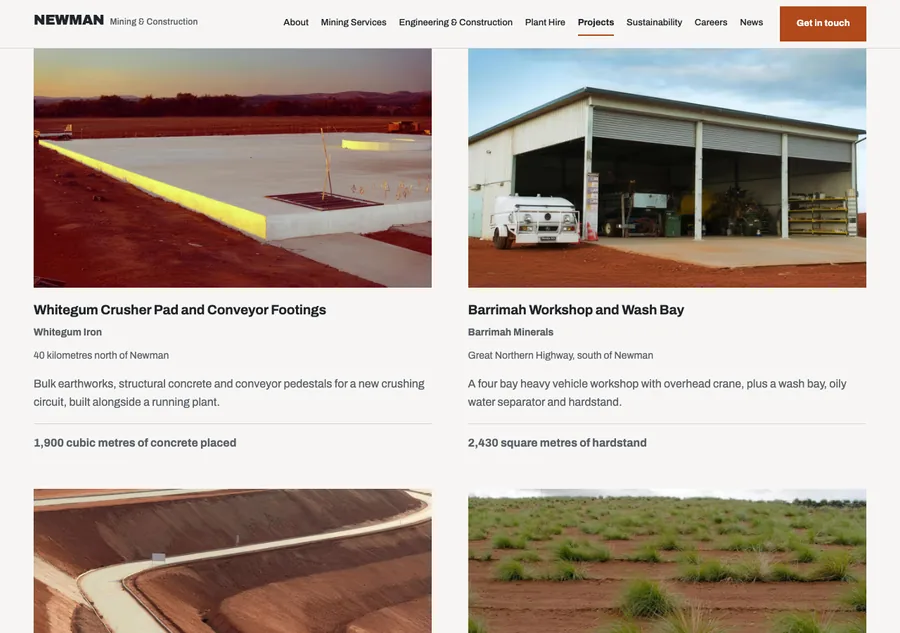
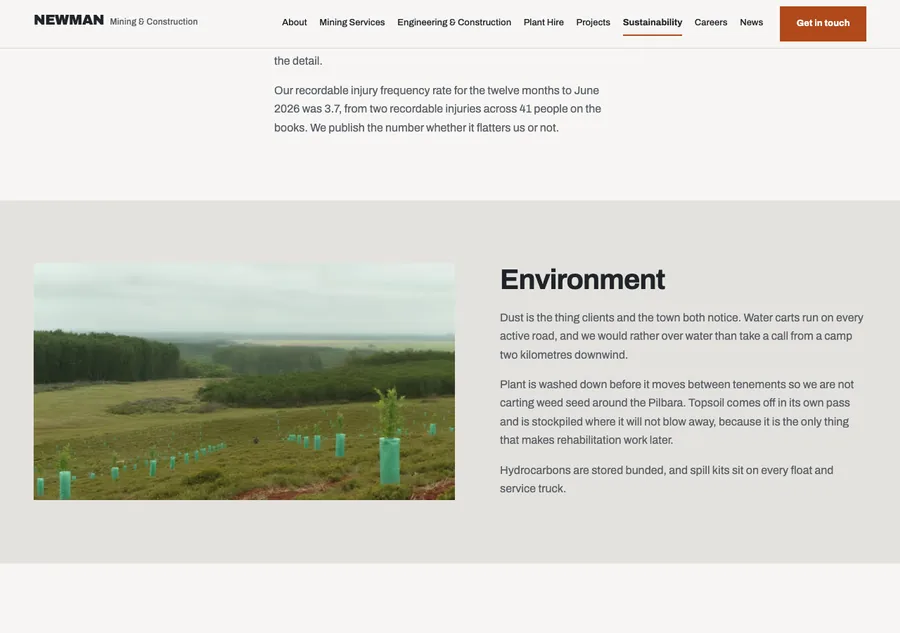
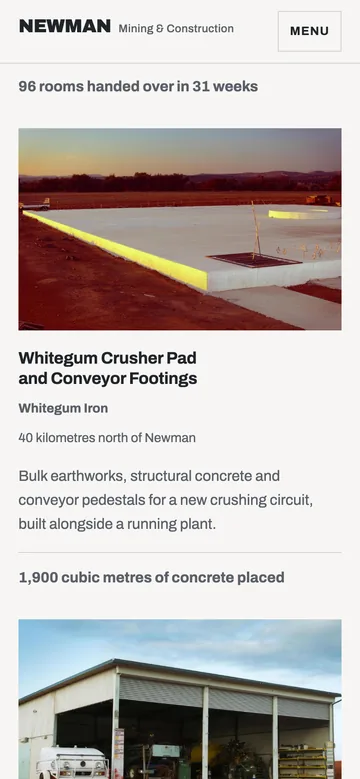
The register carries through the quiet pages. Every project sheet ends on one measured quantity. The sustainability page publishes a recordable injury frequency rate and says it will publish the number whether it flatters or not. The legibility scrim over the footage lives in the stylesheet, tuned per breakpoint, never baked into the film.
The specification
- Ten static pages, hand coded, Australian English, no framework
- 38 imagery slots, every frame generated for this build, nothing reused
- 1920 by 1080 hero film, ten seconds, five forward and five reversed, 1.9MB, no audio
- Poster frame, and a still path for visitors who ask for reduced motion
- Legibility scrim in CSS per breakpoint, never baked into the footage
- Share cards, canonical addresses and GeneralContractor structured data
- Every tap target at or over the 24 pixel accessibility floor
- Link gate: 706 internal targets resolved on the shipping build, none broken
- Contrast measured from the real footage at desktop and phone widths
What Hammer & Pixel built
- The full ten page site: services, engineering, plant hire, projects, sustainability, careers, news and contact
- The hero pipeline: a picked source frame, a motion pass, and a loop with its seam measured against an adjacent frame baseline
- The 38 frame imagery set, art directed from the majors' own photography and checked for machine truth, down to how fast a stacker really moves
- The measurement rig: contrast read from real footage at both widths, link and dash gates on every build
- The share layer: cards, canonical addresses, favicon set and structured data across all ten pages
Proof
Desktop and phone stills
Walkthrough film
Want this thinking on your own brand?
Serious enquiries receive a homepage concept for their own brand before any commitment. One page, designed properly, so you judge us on work rather than promises.
On Upwork? Message us there instead.