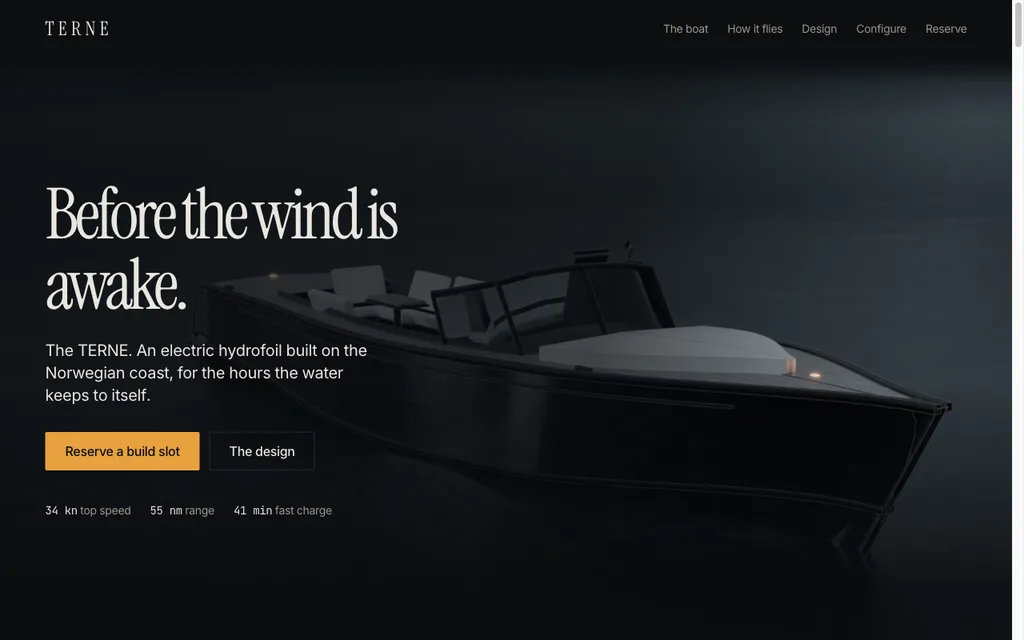
TERNE. One hull, modelled once, drives the film and the configurator.
- A fictional Norwegian electric hydrofoil, built as a single 3D hull that feeds two lanes at once: a 64 frame scroll film and a 16 combination product configurator. One asset, modelled once, paying for itself twice
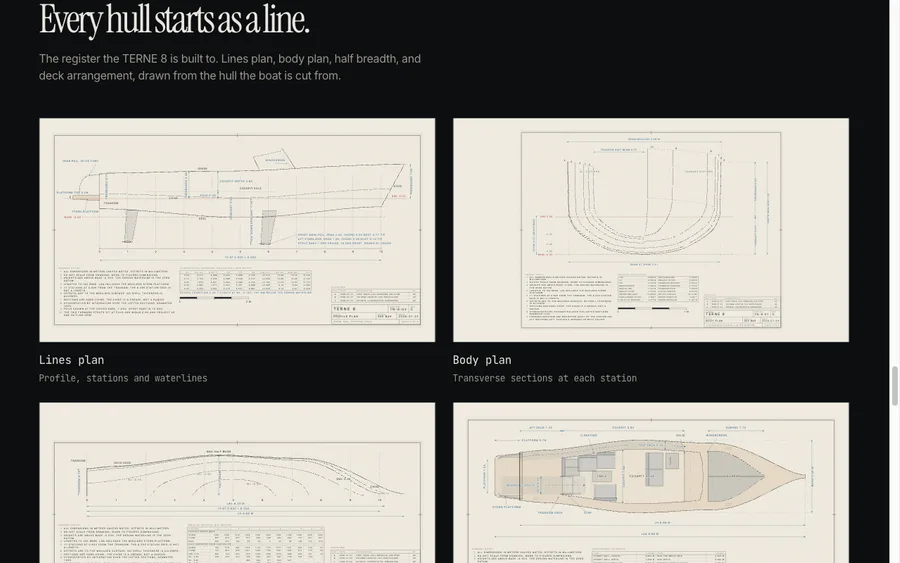
- The engineering is on the page, not hidden behind it. Four naval drawing sheets are generated from the hull's own geometry, carrying 32 dimensions and a table of offsets
- Fourteen automated checks run on every build, from contrast measured out of rendered pixels to a 27 point accessibility pass. Green before it shipped
A studio concept by Hammer & Pixel
TERNE is an invented brand, built as a studio concept. No boat exists and no deposit is taken. We build self-initiated concepts to show our approach where client work cannot: the yard is fiction, the brief is real, and so is every line of the build.
The brief
Boat builders sell an object that most buyers will never stand next to before they commit. The web page has to do the standing-next-to.
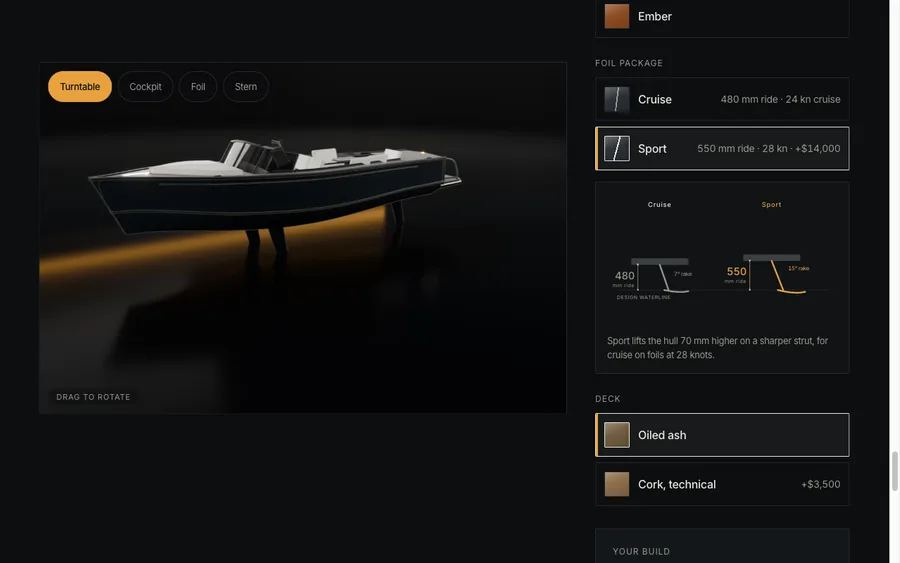
We set ourselves a harder version of that problem. Build the whole thing from one 3D asset, so a small yard could afford it: the same hull that flies through a cinematic scroll must also turn on the spot while a buyer changes its finish, its foils and its deck.
That constraint is commercial, not technical. Modelling a boat twice, once for the film and once for the configurator, is how a site like this stops being affordable for the yards that most need one.
The concept
A boat that leaves the water deserves a page that does the same thing.
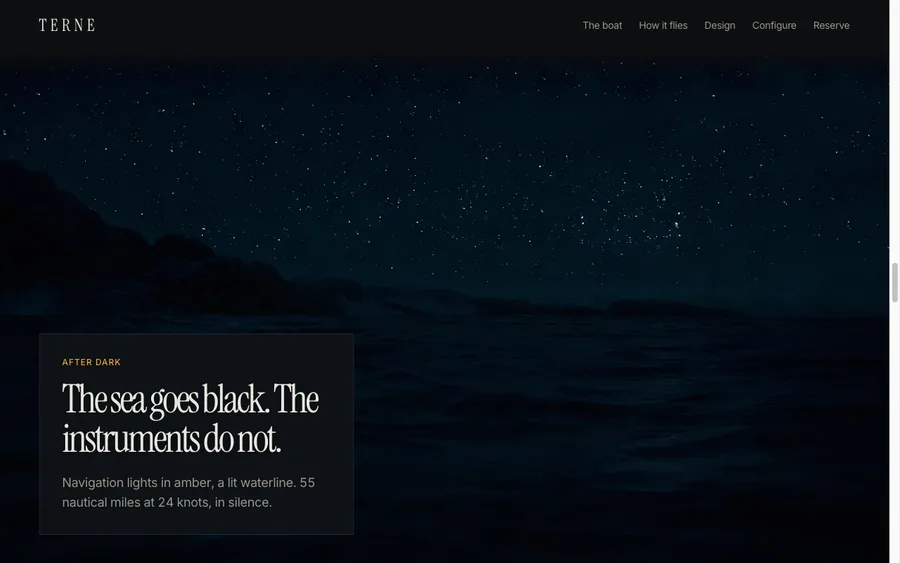
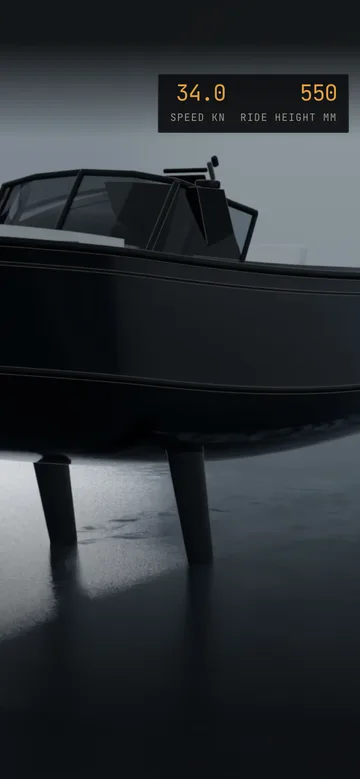
The scroll is a single continuous flight, dawn to dark, and the copy rides over it rather than interrupting it. At sixteen knots the hull lifts, and a live readout counts the speed and the ride height as it happens.
Then the page stops flying and starts explaining. A short section sets out how foiling actually works, in three steps, in plain language. We checked the market first: the closest real manufacturer gives the mechanism a single sentence before moving on to benefits. Nobody explains it. So we did.
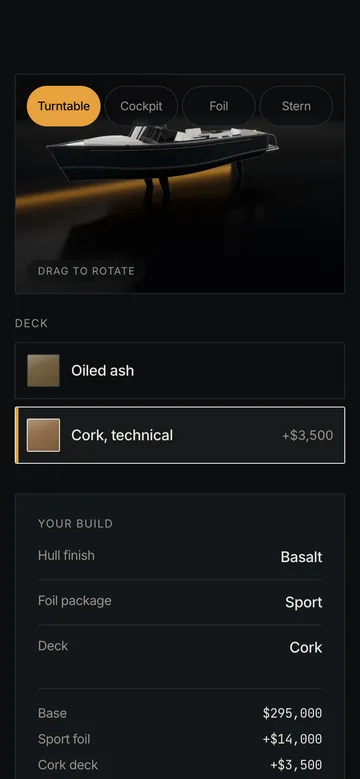
The configurator had to survive a phone. On a narrow screen the boat pins to the top and the options scroll underneath it, so a buyer never has the choice on one screen and the thing it changes on another. That is checked on every build at the two options that cost money, not at the free one sitting at the top of the list.
The specification
- 64 frame Cycles scroll film at 1600 by 1000, plus a 24 frame portrait set
- 16 configurator combinations: four finishes, two foil packages, two decks
- 36 step turntable per combination, with a low resolution proxy under motion
- Four generated naval drawing sheets: lines, body plan, half breadth, deck
- Live speed and ride height readout tied to real scroll position
- One animation duration and one easing curve across the entire page
- Fourteen spacing values, every one on a four pixel grid
- Contrast measured from rendered pixels, never from stylesheet values
- Fourteen automated checks, run at both 1280 and 390
What Hammer & Pixel built
- The hull, modelled procedurally from a lines plan rather than sculpted by eye
- The two lane render pipeline, film and configurator, from that single asset
- The drawing generator, which reads the finished hull and letters its own sheets
- The scroll engine, the turntable, and the build sheet that prices a choice
- The check suite, written so a regression fails loudly instead of shipping
Proof
Desktop and phone stills
Walkthrough film
Want this thinking on your own brand?
Serious enquiries receive a homepage concept for their own brand before any commitment. One page, designed properly, so you judge us on work rather than promises.
On Upwork? Message us there instead.