
Crown reduction and pruning in St Albans
Getting the light back without losing the tree. Reduced to growth points so it reshapes properly, rather than topped so it comes back angry.
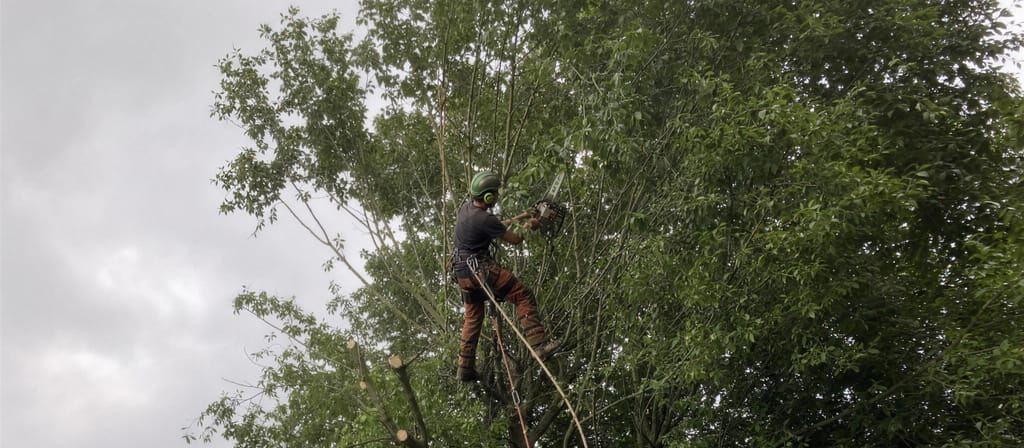
The four jobs people call pruning
- Crown reduction. The overall size of the canopy comes down, usually by a stated amount such as two metres or a third. Every cut goes back to a side branch big enough to take over as the new leader, so the tree keeps a natural outline.
- Crown thinning. The outline stays the same, but branches are removed from inside the canopy so more light and wind pass through. Useful under a dense tree where nothing will grow.
- Crown lifting. The lowest branches come off to give clearance over a lawn, a path, a drive or a road. The cheapest of the four, and often all that is really needed.
- Deadwooding. Dead, dying and broken limbs taken out. Nothing living is removed, so the tree looks the same afterwards and is a great deal less likely to drop something.
Why we will not top a tree
Topping means cutting the crown back to stubs with no regard for where the growth points are. It is quicker, it is cheaper, and it is the reason so many suburban limes and sycamores look like coat stands. A topped tree responds by throwing dense vertical regrowth from around the wounds, which is weakly attached, grows fast, and is heavier and more dangerous within a few years than what you started with. The large cut faces also give decay an open door.
The honest version costs more per visit and less over a decade. If a tree genuinely has to lose that much, the real answer is usually removal and a replacement planted somewhere sensible, and we would rather tell you that than take the money twice.
Timing
Most broadleaved trees are best worked in the dormant season, roughly late autumn to early spring, when the structure is visible and the tree is not putting energy into leaf. There are exceptions worth knowing. Birch and maple bleed heavily if cut in late winter, so they are better done in summer. Cherries and plums are pruned in summer to reduce the risk of silver leaf. Oaks in some circumstances are best avoided in the peak of the growing season.
Bird nesting season runs from roughly March to August, and it is an offence to intentionally damage or destroy a nest that is in use or being built. That does not stop the work, but it does mean we look before we cut.
Protected trees
Pruning a protected tree needs the same consent as felling one. A Tree Preservation Order covers pruning as well as removal, and in a conservation area the six-week notice applies to any work on a qualifying tree, not just to taking it down. Plenty of people find this out after the fact. We check the register before we quote and lodge whatever is needed. See protected tree work.
What the quote says
A reduction quote should tell you the amount, the method and the finish: which trees, what percentage or how many metres off, whether the shape is being kept, what happens to the arisings, and who is clearing up. A quote that just says "prune tree" is not a quote, it is an invitation to argue afterwards. Ours states the work in those terms and the price is fixed.
Get the light back
Tell us what the tree is shading and how much you want off. We come out and put a fixed price in writing.