
Tree reports and surveys in St Albans
Written findings you can hand to an insurer, a lender, a solicitor or the council. Conclusions first, recommendations second, whether or not they involve us doing any work.
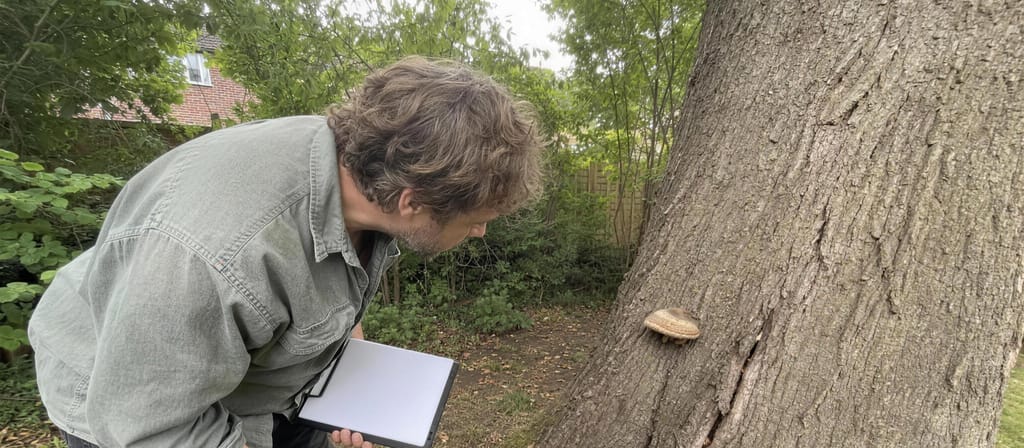
Why this exists as a separate service
A report and a quote are different documents with different jobs. A quote says what we would do and what it costs. A report says what is there and what it means, and it has to stand up when somebody else reads it who has no reason to trust us. That is why the two are priced separately, and why a report is worth having even when the answer is "leave the tree alone".
Subsidence: what a claim actually needs
St Albans sits on shrink-swell clay and is named as a Hertfordshire subsidence area. Clay moves seasonally with or without a tree involved, and plenty of cracks are thermal, historic or nothing at all. If you intend to claim against a council tree, the council publishes what the evidence has to include, and it is a long list:
Proof of ownership. Twelve months of continuous level monitoring. Twelve months of crack width monitoring. A structural investigation including boreholes. An engineering appraisal. Heave calculations. And an arboricultural report identifying the tree's proximity to the property, with DNA root identification.
Source: St Albans City and District Council, tree-related building subsidence.
Read that list again and notice what it does not say: nowhere does it say "fell the tree and see if it stops". Felling first destroys the evidence the claim depends on, and on clay it can trigger heave as the ground rehydrates, which does a different and sometimes worse kind of damage.
Our part of that list is the arboricultural report: species, size, distance from the affected elevation, water demand, condition, and an assessment of whether the tree is a plausible contributor at all. We write it so it can sit alongside the engineer's work rather than contradicting it. The full order of play is in our guide on clay, roots and cracks.
Mortgage and homebuyer queries
A surveyor notes a large tree near the house, the lender asks a question, and the sale stalls. What resolves it is a written assessment of the species, the mature size, the distance and the soil, with a clear statement of risk and any recommended management. Usually the answer is that the tree is fine and a stated pruning cycle is enough. Occasionally it is not, and it is better to know before exchange than after.
Planning and construction
- Tree survey to BS 5837. The standard survey that accompanies a planning application, categorising trees and setting out root protection areas.
- Arboricultural impact assessment. What the proposed development does to the trees, and what that means for the application.
- Method statement and protection plan. How trees will be physically protected during the build, which is often a planning condition rather than an option.
Getting this in before you submit is far cheaper than getting it after a refusal or a stop notice.
Condition and safety surveys
If you own land that the public has access to, you have a duty of care over the trees on it. A condition survey records each tree, its defects, a risk rating and a recommended action with a timescale, and it gives you a documented record that you inspected. Schools, churches, blocks of flats, estates and commercial sites all need this. The record is as valuable as the findings, because it is what shows you acted reasonably.
Boundary and neighbour disputes
Where a tree straddles a line or an overhang is in question, an independent written position tends to settle things faster than another exchange of letters. We state where the tree stands, what the condition is and what is reasonable, and we are equally willing to say that the complaining side has no case.
What you get, and what we will not do
A written report with photographs, measurements, the reasoning and dated conclusions, in a form you can forward. What we will not do is write a report to a conclusion you have chosen in advance. If the finding is that the tree is healthy and should stay, that is what the report says, even where a removal would have been the larger invoice. A report that bends is worthless to you the moment anyone else reads it.
Need it in writing?
Tell us who is asking for the report and what they need it for. We will tell you what it takes and what it costs.