
Hedge cutting and reduction in St Albans
Annual trims, serious height reductions, and the hard cuts that only some species survive. We check for nests before a blade starts.
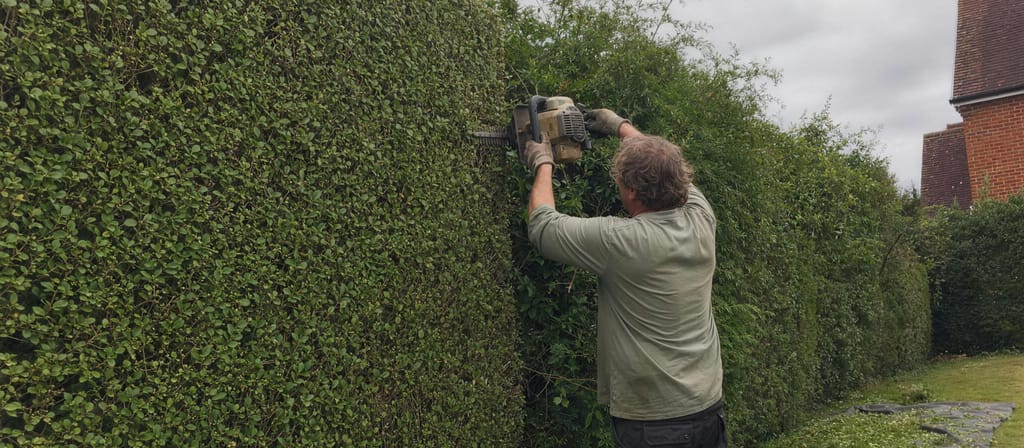
What we are actually doing
- Maintenance trim. Sides and top taken back to the established line. Once a year for most hedges, twice for fast growers like privet and leylandii.
- Height reduction. Taking a hedge down from whatever it has reached to a height you can maintain. This is a bigger job and produces a lot more waste than people expect.
- Width reduction and facing up. Reclaiming the metre or so a wide hedge has taken off your garden, and getting the faces straight again.
- Hard cutting back. Cutting into old bare wood to restart a neglected hedge. Whether it works depends entirely on the species.
- Removal. Out completely, with stumps ground if you want the ground back. See stump grinding.
Which hedges take a hard cut, and which do not
This is the part that decides whether a neglected hedge can be saved. Yew, beech, hornbeam, hawthorn, privet, laurel and holly will regenerate from old wood, so a hard cut into bare stems will green up again, usually over two or three seasons if it is done in stages.
Conifers are different. Leylandii, thuja and most cypress will not shoot from brown wood. Cut back past the green and that face stays brown for good. A leylandii hedge can be reduced in height and kept trimmed, but the sides can only be taken back to the edge of the green growth. Anyone who tells you a fifteen-year-old leylandii will fill back in from bare wood is telling you what you want to hear.
Nesting season, in plain terms
It is an offence to intentionally damage or destroy a wild bird's nest while it is in use or being built. The main season runs from roughly March to August, and hedges are exactly where birds nest. That does not make hedge work illegal in summer. It makes it something you look at first.
Our position is simple. We look through the hedge before starting. If there is an active nest, that section waits and we come back. If you need the whole job done to a date in June, we will tell you honestly whether that is realistic before you book it.
Boundary hedges and the neighbour question
If the hedge is on your land, it is yours to cut. If it is on your neighbour's land, you may cut back overhanging growth to the boundary line, and strictly speaking the cuttings belong to them. If it sits on the line it is a shared hedge and both sides have a say. We will not cut into a neighbour's side without their agreement, and we will say so rather than causing you a dispute for the sake of a tidier finish.
Where an evergreen hedge over two metres is genuinely blocking light to a home, England has a high hedges process under Part 8 of the Anti-social Behaviour Act 2003, run by the council as a last resort after you have tried to settle it directly. It costs a fee and it takes time. Most of these get sorted with a conversation and a reduction.
Protected hedges
A Tree Preservation Order can cover individual trees within a hedge line, and inside a conservation area the six-week notice applies to trees over 75mm in diameter whether or not anyone calls them a hedge. An old boundary of grown-out hornbeam or field maple is a row of trees in law even if it looks like a hedge to you. We check before we quote. See protected tree work.
Waste
Hedge cuttings are bulky and light, so a height reduction fills more of a chipper than a whole small tree does. Chipped and taken away, chipped and left for you as mulch, or stacked in a corner as habitat. Say which you want and it goes on the quote.
Get the hedge back under control
Tell us roughly how long it is and how high it has got. We come out and price it properly.