
Stump grinding in St Albans
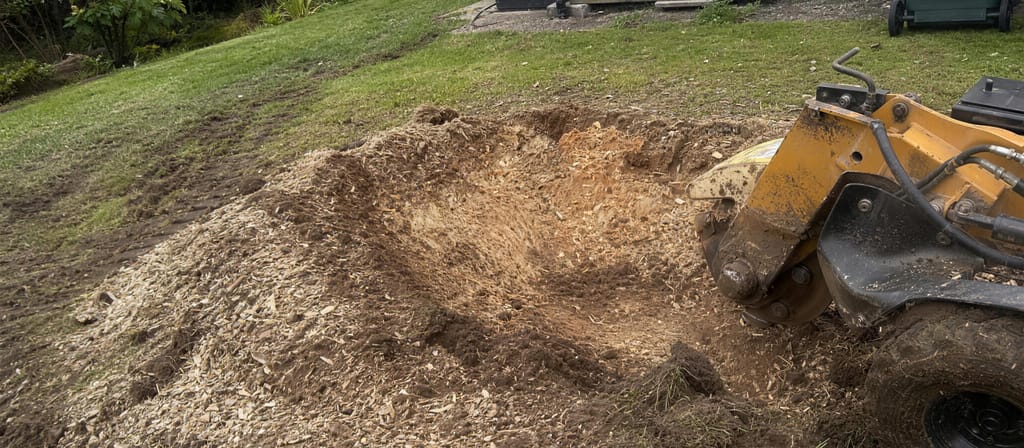
The stump taken out below ground level so the space is usable again. The important part happens before the grinder starts.
Grinding, not digging
A stump grinder is a wheel of tungsten teeth that sweeps across the stump and turns it into chip, a few centimetres at a time. It goes down below ground level, typically 150mm to 300mm depending on what you want to do with the space afterwards, and it follows the main surface roots out from the stump where they are in the way.
Digging a stump out with a machine is the alternative, and it is a bigger, messier and usually more expensive job. It leaves a crater that has to be filled with imported soil, and on a tight garden it needs machine access you often do not have. Grinding is the right answer in the large majority of domestic cases.
What we check first
A grinder does not know the difference between a root and an electricity cable, so the checks before it starts are not a formality:
- Buried services. Electricity, gas, water, drainage and telecoms. Old properties in particular have runs that are not where anyone expects and are often not as deep as they should be.
- Hard edges. Walls, footings, kerbs, patio slabs and manhole surrounds. Teeth into concrete ruins the teeth and the concrete.
- Ground conditions. Loose stone and flint in the soil, which is common on this ground, throws hard and blunts fast.
- Access. The narrow grinders fit through a standard garden gate. Wider machines are quicker but need a drive or a side entry.
Where a service run is suspected and cannot be confirmed, we say so and either hand-dig around it or leave that side of the stump. We do not gamble on it.
What you are left with
A hole full of chip and soil, roughly the diameter of the stump plus the surface roots. You have three choices, and the quote should say which one you are getting.
- Backfilled with the grindings. Cheapest and fine if you are not planting. Mound it slightly, because it settles.
- Grindings out, topsoil in. What you want if the area is going back to lawn. Chip does not make a seed bed.
- Grindings out, dug deeper. Needed if you are replanting a tree in the same spot or laying a hard surface over it.
Regrowth and honeysuckle stumps
Some species send suckers up from roots left in the ground even after the stump has gone. Poplar, cherry, lilac and false acacia are the usual offenders. Grinding the stump reduces it but does not always end it, and the honest position is that you may be pulling suckers for a season or two. We will tell you if the species you have is one of those before you pay for the grind.
Protected trees and stumps
A Tree Preservation Order protects the tree, and once a tree has been lawfully removed the stump is generally no longer the issue. Where the tree is protected and still standing, the stump conversation comes after the consent, not before it. If a protected tree has come down in a storm, the exemption paperwork still applies. See protected tree work.
Get the stump gone
Tell us the postcode, roughly the stump diameter and what the space is becoming. We price it properly.